

Bring the real equipment
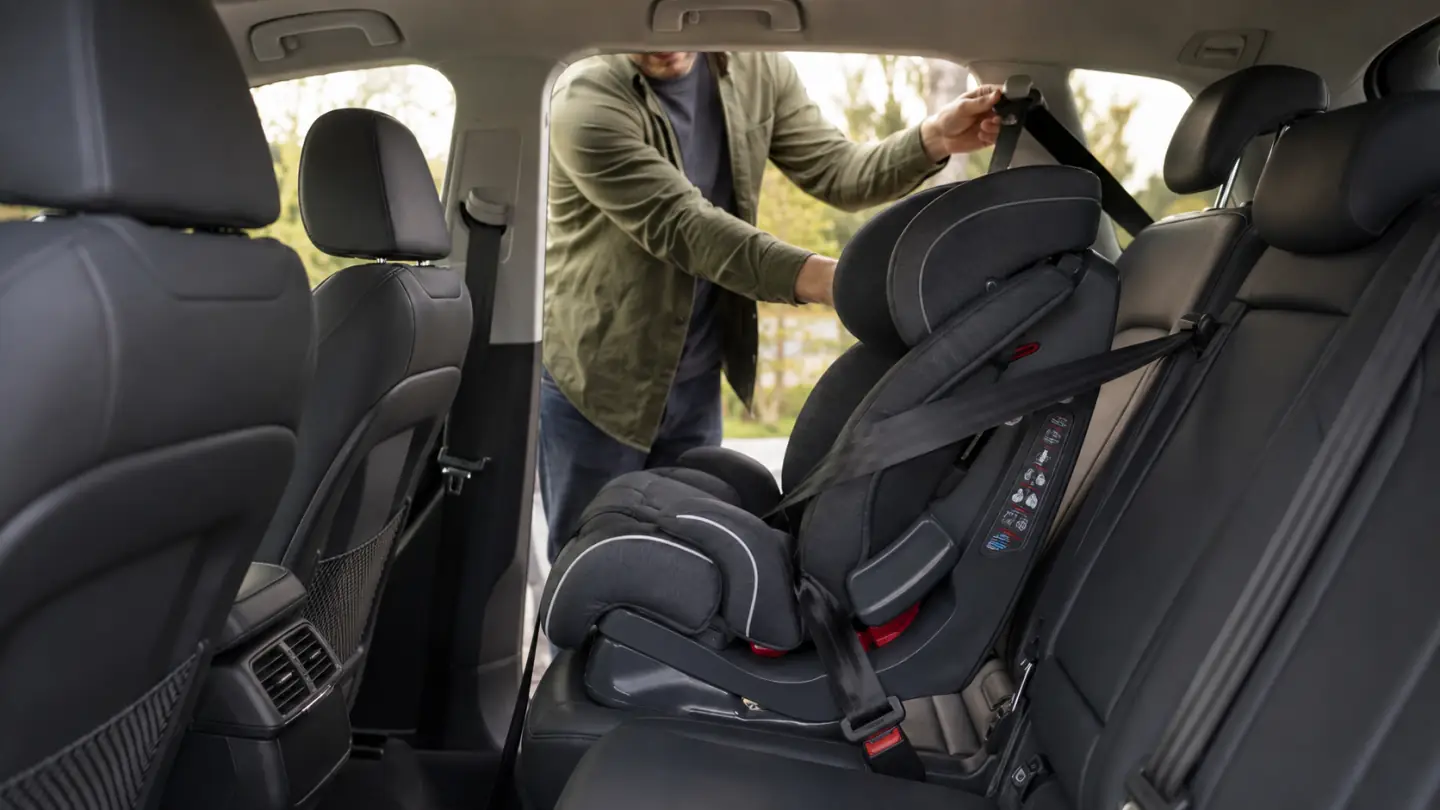
Fit your child seat using the approved anchorage method and confirm that front-seat occupants still have enough room. Check the number and location of top-tether and ISOFIX points on the exact variant.
Test everyday access
- Open the rear doors in a normal parking space.
- Lift a pram or shopping load over the boot lip.
- Check visibility with all seating rows occupied.
- Confirm air vents reach rear passengers.
- Inspect door bins, cupholders and charging points.
- Test the reversing camera in daylight and low light.
- Check the spare-wheel or puncture-repair arrangement.
Safety ratings and features can vary by build date and variant, so verify them against the exact vehicle rather than relying on a model-family reputation. The most useful family car is one that makes routine tasks easier without exceeding the household's running-cost budget.
Rehearse a school-day load
Install the actual child seats, place the pram or sports bags in the luggage area and seat the tallest regular passengers. Check whether a rear-facing seat leaves reasonable space in front and whether the tailgate can open in your garage. A published boot volume cannot show how wheel arches, a sloping roof or a high load lip affect your equipment.
Check comfort when Melbourne heats up
Run the climate control with the vehicle stationary and verify whether rear passengers have vents or independent controls. Look for effective window shades, usable bottle storage and charging access. On a test drive, listen for loose cargo-floor pieces and check ride comfort over typical suburban surfaces.
Verify the exact safety specification
Safety features and ratings can change by variant, build date and optional pack. Confirm the exact car's airbags, autonomous braking, blind-spot assistance, child-seat anchorages and spare-wheel arrangement. Driver-assistance systems have operating limits; the test drive should confirm that the controls are understandable without encouraging reliance on them.